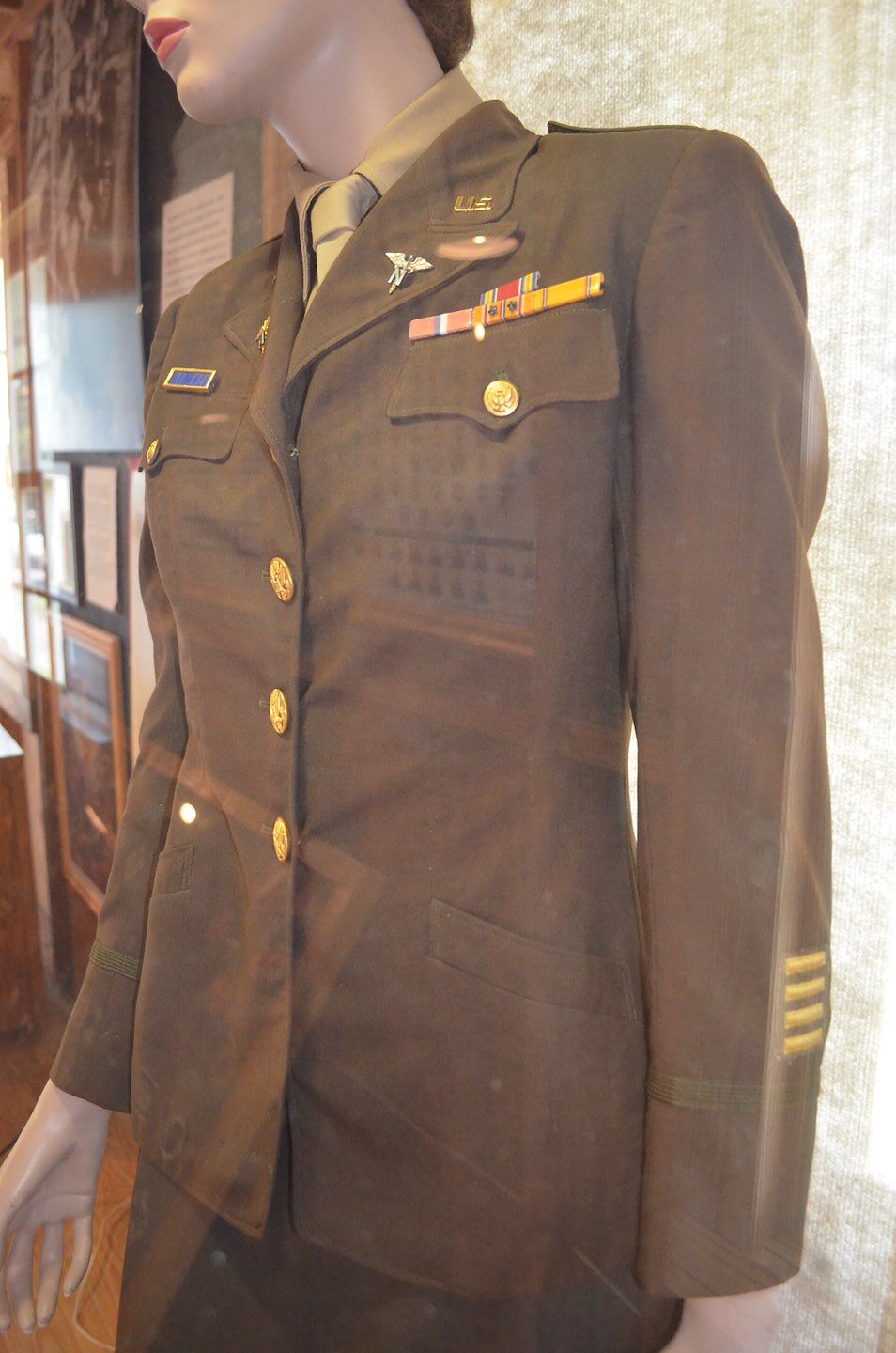
Dr. Jerry Sanson, Louisiana Maneuvers & Military Museum

World War II caused numerous disruptions in American society, not least of which was a change in traditional gender roles as women assumed responsibility for accomplishing needed work when men volunteered or were drafted for military service. Louisiana still followed the cultural rules of generally conservative southern society during the early 1940s, so while women assuming traditionally male roles in society was necessary, not everyone felt comfortable with the new reality.
The Times-Picayune/New Orleans States newspaper editorialized in 1942 that “It would be foolishly optimistic to suppose that we shall be able to win this war by employing only a part of our human resources.” The Town Talk in Alexandria added that women contributing to the war effort “are regarded with new respect.”
A majority of Louisiana legislators thought differently that same year when they voted down a change in the state’s requirements for registering for jury duty. State law provided that men were automatically placed on rolls as potential jurors when they registered to vote. Women’s names were not placed on the rolls unless they registered to serve. The bill was designed to replenish the supply of potential jurors that was depleted because of the large number of men absent from the state while serving in the war. The Louisiana Federation of Business and Professional Women’s Clubs favored the bill, but legislators did not approve it, apparently following the lead of one legislator who commented during debate that women serving on juries might have to hear “unsavory” testimony from which southern womanhood had to be protected. The Baton Rouge Morning Advocate had the last word on this bill, commenting that “We’ll have more of this sadly comic business as long as the idea persists that women are . . . much inferior to men and don’t deserve an opportunity to prove that the holders of these opinions are wrong.”
Louisiana women edged closer to full participation in politics and government during the war years. Lucille May Grace served in statewide elective office as Registrar of State Lands. The League of Women Voters established chapters in Baton Rouge, New Orleans, Shreveport, and Monroe. Members lobbied legislators in support of bills and discussed local, national, and international issues.
The League ran into the difficulty of combatting traditional attitudes, in this case the belief that a “lady” did not participate in politics. One League member in Shreveport lamented that women “brought up in the Old South tradition” were reluctant “to undertake any work of this kind.”
Many women who found employment in war plants knew that they were performing important jobs to support the military effort. The first three women hired at the Rheem Manufacturing plant in New Orleans during the war agreed that “We hope to turn out our work fast, so that the ones we love can blast the Jap[anese].” Significantly for later developments in the women’s movement, Ruth Sanderson, a worker at the ordinance plant near Minden, remarked, “That first check was the prettiest check I ever saw.” Many other women who experienced the feeling of economic liberation provided by a paycheck found it difficult to leave the workplace after the war ended. War work ended the stigma of a married woman working outside the home that was a part of southern womanhood and opened the door for future employment.
War work could also help assuage the loneliness many women felt during the war in the absence of their significant others. Merle Weigel of Amite wrote to her soldier-husband that “I’m so glad to have a job, for it keeps me busy all day and when I get home at night I’m tired and can sleep.” Mrs. Weigel’s letters preserved in the LSU Archives also reveal how she coped by herself with everyday concerns such as house repair and rearing two adolescent boys without her husband’s assistance.
Women retreated from their wartime gains after hostilities ended, but did not forget their forays into prosperity and some measure of equality. Their fuller acceptance into the American economy and culture would not come until about twenty years after the war.
The Army nurse exhibit and picture of women pilots among other artifacts in the Louisiana Maneuvers and Military Museum serve as reminders of the important roles women filled in the fight against totalitarianism during the 1940s.