

Painting based on 1838 Gibson’s Directory of New Orleans sketch.
In 1911-1912, the garrison’s three riverfront buildings, 2 towers and the post headquarters, were demolished due to levee repair and construction by the US Army Corps of Engineers.
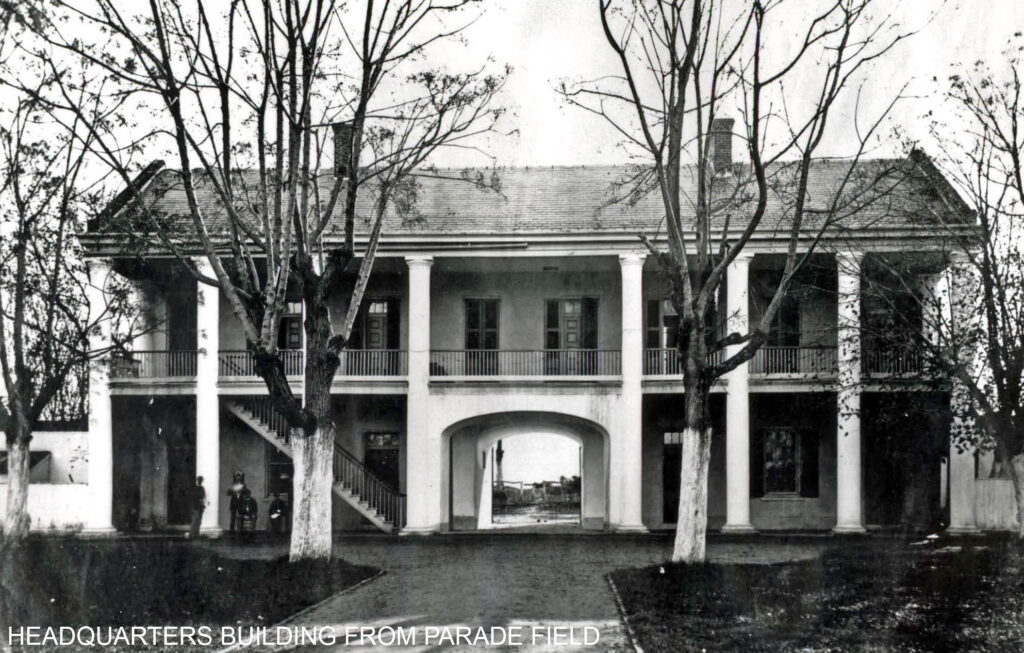

The middle building was the original headquarters and had a large sally port entrance to the river, where boats docked. This was the original “front” of the post, since the river and the levee road was the main way to travel to the facility before St Claude or Claiborne Avenues were built.
In April of 1835, LTC David Twiggs suggested adding a porch over the door on the front of the building and stated he was anxious to occupy it as he was tired of paying rent. Thus LTC Twiggs was the first post commander.

Union Soldier at gate, Civil War
Thousands of Native Americans walked through this gate in the 1830s as part of what we know today as “The Trail of Tears” which involved implementing the relocation of Seminole and other tribal members from Florida to Oklahoma as part of the US Indian Removal policy. They would stay on Jackson Barracks a few days or weeks and then be transported by steamboat to Little Rock, Arkansas. In 2005, the burial of a Seminole woman was discovered north of the original post wall during construction. She was reinterred along with others buried in the same location and the area preserved as a memorial green space.
Also demolished were the two towers on each corner of the south wall.
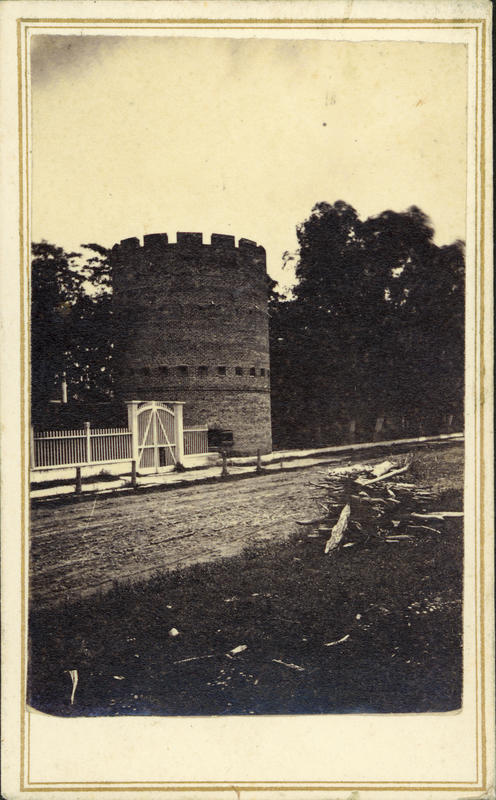
JB Tower 1864 (LSU Special Collection)
Artist, West Point graduate and US Army mapmaker and illustrator, Seth Eastman drew the view from the southwest tower while stationed here in 1848.
