Jerry Sanson
Louisiana Maneuvers and Military Museum
July 2026

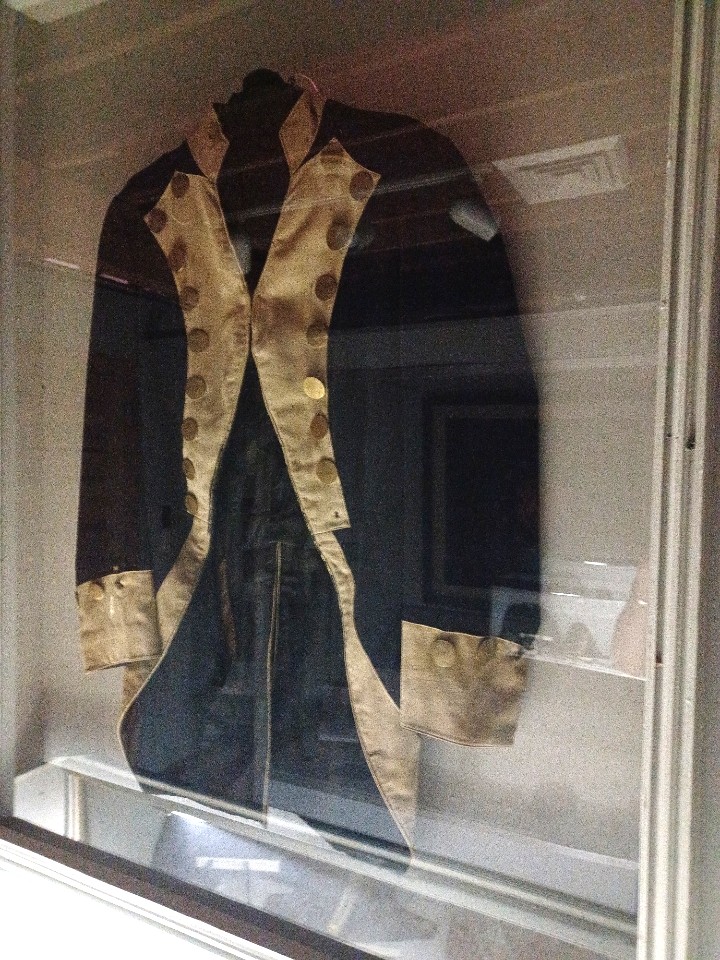
Examples of uniforms on display at Jackson Barracks Military Museum
Thomas Jefferson included several grievances that American colonists held against the British government as he framed the reasons for separation from the British Empire in the Declaration of Independence. One of them was the argument that Parliament had unconstitutionally levied taxes for revenue on the colonies, even though colonists had convinced themselves that the British had no authority to do so. Members of Parliament were just as deeply convinced that they had every right to legislate or levy taxes for revenue on the colonists.
Their fundamental difference on this issue originated in their different beliefs about the theory of representation. Both sides agreed that British practice dating all the way back to Magna Carta in 1215 guaranteed that a British subject was to be taxed only by a government in which he was represented.
The question upon which they disagreed was the nature of that representation. The British government used the theory of virtual representation. According to that theory, every member of Parliament represented the interests of every British subject. It did not matter whether the subject resided in London, somewhere else in Britain, or in any of the British colonies. According to this interpretation of representation, Parliament had the authority to levy any tax that it chose to levy in the thirteen seaboard colonies.
Colonists developed the rival theory of actual representation. This approach held that a colonist was not represented in a legislative assembly unless he had a voice in the selection of his member of that assembly. The collective authority of members gave the assembly the right to approve laws and impose any levy taxes it chose on its voters.
Another area of contention arose from the reasons governments levy taxes. Sovereign governments can levy taxes simply to raise revenue. The treasury needs a boost, so the government increases the flow of money into the coffers to fix the problem.
The second reason governments impose taxes is to regulate commerce. If the government wants to protect a sector of the economy, it can levy an import fee on competing products produced in other countries. These specialized taxes, called tariffs, have been used by many governments around the world and many administrations in the United States.
Colonists acknowledged that Parliament possessed the authority to regulate commerce throughout the Empire but argued that it did not have the power to levy revenue taxes because no colonist possessed the right to vote in any Parliamentary election. Only people who lived in Britain counted as constituents for those elections. No representation, no taxation.
The Stamp Act was one of a series of taxes levied in the colonies to raise revenue. It was nakedly a tax for revenue and could not be disguised as a regulation of commerce. It taxed printed works in the colonies from newspaper pages at about 85 cents in today’s money value per page to advertisements at $24 per page; almanacs used by farmers and enjoyed by many cost almost $2 extra in tax; documents that legalized people’s lives, including everything from marriage licenses to land deeds, carried taxes ranging from $12 to $120 per page. College graduates had to pay a tax on their diplomas of about $450; attorneys were taxed about $2,250 for the stamp that had to be attached to their license to practice their profession. Colonists could not even relax without being taxed. Playing cards carried a tax of about $12 per pack and dice a rate of $120 per pair.
Colonists deeply resented the money that was to come out of their pockets and the tax-for-revenue at the foundation of the act. A mob in Boston vandalized a warehouse that rumor implied was used to store stamps. Another mob vandalized the Lieutenant Governor’s house when he dared to complain. British officials feared additional violence and sent British troops to keep peace. Unfortunately, they killed seven colonists in yet another outbreak of violence.
The Continental Congress sent a petition to King George III asking him to reign in Parliament that acted unconstitutionally and trampled their rights as British subjects. As it awaited his reply, colonists in Massachusetts received word that their governor planned to seize their guns. They gave him their reply in shot by “the rude bridge that arched the flood” at Lexington and Concord, and the war of the American Revolution was on.
Congress declared to other countries of the world that the colonies took their place as an independent United States on July 4, 1776. The colonists still had a war to win against the strongest empire in the world at the time, and they still had to create a functioning government reflecting their ideals, but they would accomplish those feats as free Americans, not as subjects of the British Empire.
So, celebrate the semiquincentennial of our independence. Eat a hot dog or two, cheer on a parade, watch fireworks in person or on media, but also remember those who crafted the dream of our freedom and those who died to achieve it.
The Louisiana Maneuvers and Military Museum includes in its exhibits a replica of an American Revolutionary uniform jacket made for the centennial celebration of American independence in 1876. Even though it is not original to the Revolutionary era, it is an important artifact that shows how earlier generations celebrated 100 years of freedom.