Jerry Sanson
Louisiana Maneuvers and Military Museum
September 2026

The Louisiana Department of Education realized as early as 1940 that something was amiss in educational opportunities the state provided for its black citizens. According to one report produced by its staff, “neglect of the Negro [a word used commonly during the 1940s, even in official government reports] and indifference to his home life, his health, his education, and his training for useful and gainful employment are detrimental to public welfare.” The Louisiana Educational Survey Commission repeated almost the same language in its study of Louisiana education in 1942.
Despite the problems encountered by educators across the state during World War II, Louisiana achieved some improvements in black education, but not nearly enough to address deficiencies created by decades of neglect.
Segregation established after the United States Supreme Court’s Plessy v. Ferguson decision in 1896 led to separate but decidedly unequal schools in Louisiana. The inequality is most evident in funding. During 1942, the state spent $66 per year on the education of a white student and $15.50 for each black student. Some parishes raided the funds provided by the state for black education in order to subsidize white education leaving even less money to fund black schools.
The state counted only forty-five approved public and ten private high schools for black students during the 1940-41 school year. Fourteen parishes provided only elementary schools for their black students, neglecting to provide at least junior high school instruction. Thirty-nine parishes provided black supervisors for segregated black schools, but they were subordinate to white supervisors in the districts. The curriculum provided for the black schools focused on vocational education. Topics on agriculture, home economics, and industrial arts dominated the school day. Only a few schools provided academic courses that might lead to any type of professional occupation.
School buildings were often as deficient as the curriculum. About two-thirds were one-room buildings with students in several grades competing for the teacher’s attention. Buildings often resembled school facilities from the turn of the century, wood-frame structures inadequately heated by a wood stove providing primitive toilet facilities and surrounded by inadequate playground space or equipment for physical development. Instruction and textbooks, which were often worn-out castoffs from white schools, were geared to white values, and thus often failed to awaken black students’ interest in learning.
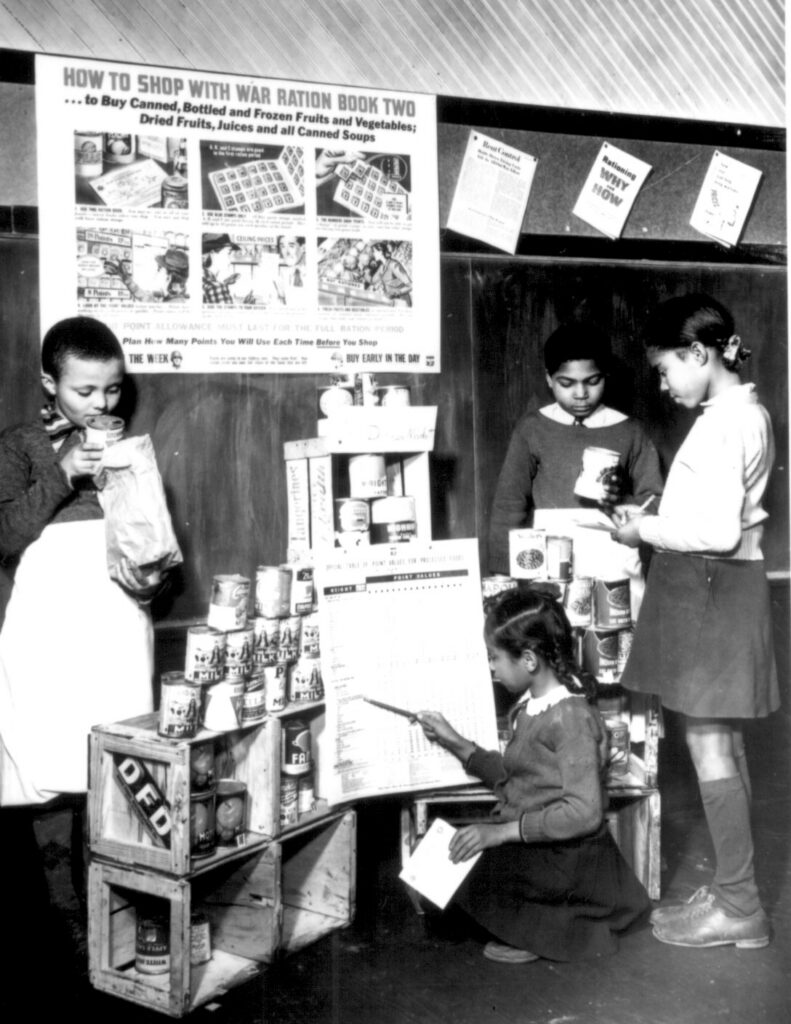
Wartime shortages and problems affected black schools as they did white schools during World War II, but black education made some gains during the war years. Louisiana provided 128 public high schools for black students by 1946, 83 of which were accredited by the state. Black educators challenged the unequal pay scales that penalized them for decades and made some headway toward equality in court cases. Louisiana still had a separate and unequal education system after the war, but at least some aspects showed signs of improvement.