

The second floor of this building provided quarters for the prison guards. The lower floor contained 3 prison cells. In 1868, all 3 cells held between 9 and 56 prisoners a day, including prisoners from other commands. The War Department’s surgeon general recommended confining such high numbers of prisoners to be discontinued due to the resulting illnesses caused by the lack of ventilation. By 1871, the upper 3 rooms were occupied by laundresses. By World War I it was the Quartermaster’s Office.

1918
Bake House
In 1837 the Commanding Officer notified his Assistant Quartermaster Officer of the necessity of a Bake House which had been forgotten in the initial construction. Built into the perimeter of the wall, During World War II, the post bakery proved extraordinarily important when Jackson Barrack’s bakers developed a process for preserving bread shipped to overseas combat areas.

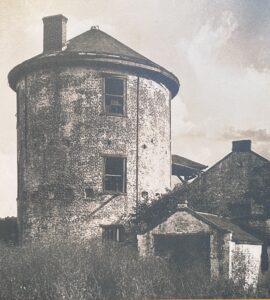
Northeast Tower, Bake House (Garage), Storehouse in back, early 20th c., Historic New Orleans Collection
The Works Progress Administration renovated the structure for use as a garage and today it is used as outdoor seating space.

1837 Bake House built on back of original perimeter wall next to northeast tower.
During World War II, the tradition of baking at Jackson Barracks proved extraordinarily important when post bakers developed a process for preserving bread shipped to overseas combat areas.
East Tower
The East Tower is one of the two surviving towers from the original 1835 post construction. By the late 1800s new conical roofs had been installed.
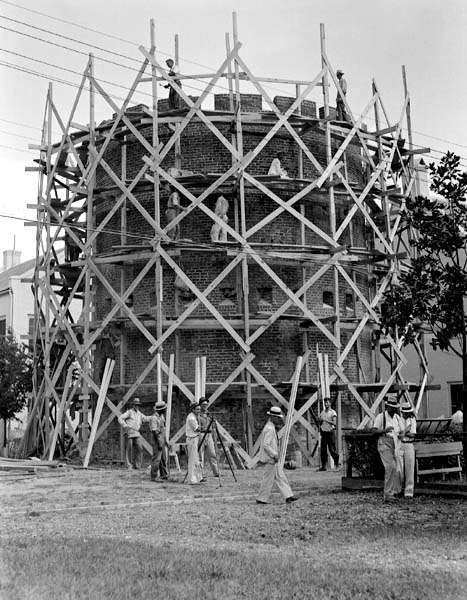
The Works Progress Administration restored the 3rd story crenellations that give it a “castle-like” appearance reflecting its original design as a “citadel” for defensive purposes. Riflemen used crenelations and the second story rifle loopholes for cover allowing fire in all directions. By the 1870s it was being used as a storehouse. Today it serves as VIP guest quarters.