
Jerry Sanson
Louisiana Maneuvers and Military Museum January 2026
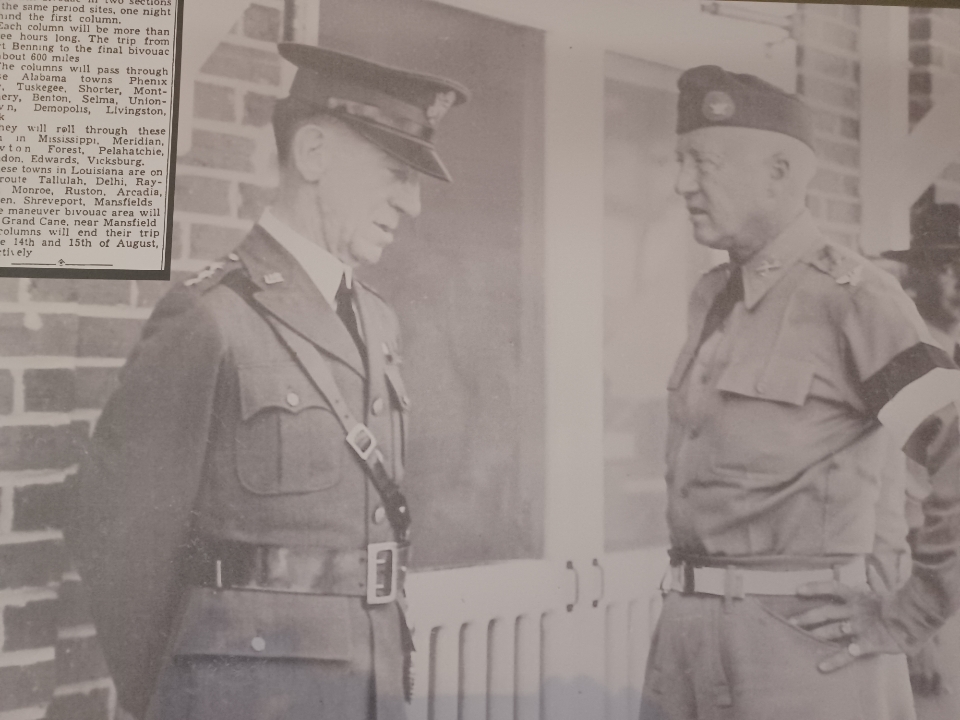
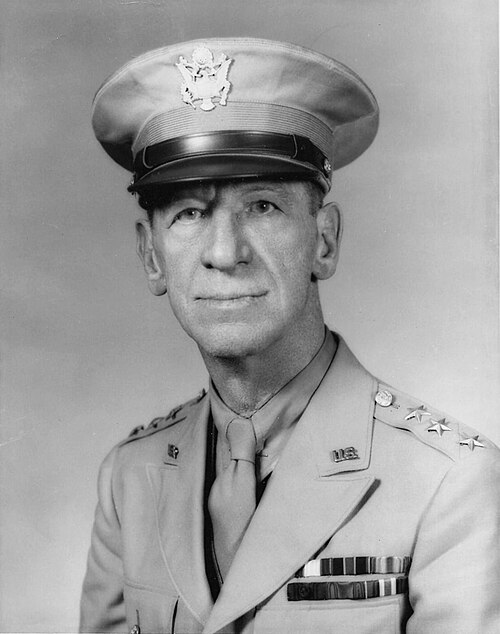
Ronald Schaffer wrote in his article about Gen. Stanley Embick published in the journal Military Affairs during 1973 that “In the shadows of America’s highly publicized generals and admirals there have long stood senior officers whose importance far exceeded their fame.” Gen. Stanley Dunbar Embick was one of those officers whose career led him to Louisiana and the Louisiana Maneuvers.
Stanley Embick was born in Greencastle, Pennsylvania, on 22 January 1877, the eldest of four children born to Milton Addison and Mary Elizabeth Dunbar Embick. He graduated from West Point in 1899, married Ethel Wall in 1902, and his early military career included service during the occupation of Cuba after the Spanish-American War, on the staff of the Coast Artillery School at Ft. Monroe, Virginia, and Assistant to the Chief of Artillery in Washington, D. C. Staff service for the Supreme War Council and the Commission to Negotiate Peace during World War I earned him his first Distinguished Service Medal.
War Department General Orders No. 69 (1919) that awarded the DSM cited his “sound military judgement, qualifications, his breadth of vision” that enabled him to render “invaluable aid in solving the many complex problems that have come before the Supreme War Council.”
Embick spent the 1920s splitting his time between Washington and the Philippines and attending and then instructing at the Army War College.
He returned to the Philippines in 1932 as a brigadier general in charge of Harbor Defenses. One of his responsibilities included constructing the Malinta Tunnel on Corregidor later used as a bomb-proof personnel shelter, storage area, and hospital by American troops who had retreated to the island during World War II.
He was promoted to major general and selected for the post of Director of the War Plans Division where he served for less than a year before being appointed as the Army’s Deputy Chief of Staff in 1936. The year 1938 brought more advancement: Commander of the Third Army headquartered in Atlanta, Georgia, and promotion to Lieutenant General.
Embick was serving in that capacity when Army Chief of Staff George Marshall decided that American troops needed extensive and complex training in modern mobile warfare in case the United States became involved in World War II. He was a logical choice to find a location for the massive training maneuvers that Marshall envisioned.
Embick and his aide, Major Mark Clark, headed to central Louisiana to survey an area that the Army had used during the First World War to train many of its troops. They found a large area that was thinly populated and contained roads, trails, swamps, rivers, and forests—eventually 3,400 square miles of terrain on which the Army could create realistic battlefield conditions.
Marshall and Embick created several questions for the 1940 Louisiana Maneuvers to answer: would the 75-mm antitank gun mounted on halftracks work, could a mechanized cavalry replace horses, could American paratroopers be dropped effectively and accurately in large numbers and on rough ground or in bad weather, could new “triangle divisions” operate more effectively than the old “square division” arrangement, could the colonels and brigadier generals currently in the Army command large units over large tracts of land, would American communication systems meet the challenges of modern war? Embick also determined which units would join “battles” at certain times and the number of casualties they would experience in order to determine the amount of time necessary to transport a “wounded” soldier to medical care and whether American medical personnel could provide treatment to a large number of casualties caused by a heavy battle.
Someone had to determine whether the commanders and troops answered these questions, so Embick appointed and trained umpires to observe and record their assessments of the action. In addition, he conducted interviews and collected observations from commanders and troops on the ground about aspects of the exercise.
The Spring 1940 Maneuvers began on May 9 with 70,000 soldiers. Embick personally supervised the four separate exercises conducted in a series of three days each. He reached a conclusion that the Army was not yet ready for mobile warfare. Even though troops were generally in good physical condition, the sheer logistics of mechanized war over a large area revealed that Army practice needed serious attention. General Marshall, however, had said that he wanted mistakes made in Louisiana where they could be corrected, not on the battlefields where lives would be lost. Lt. Gen. Stanley Embick enabled Marshall’s wish in 1940, planning, executing, and establishing practices for training an American Army that helped lead the way to Berlin and Tokyo.
Embick retired from his military career initially in 1941 before being recalled for service because of the war. He served as Chief of the Joint Strategic Survey Committee, Chair of the Inter-American Defense Board, and as a delegate to the Dumbarton Oaks Conference that planned the United Nations in addition to other work. He retired for the second time in 1946 when he received a second Distinguished Service Medal. War Department General Orders No 97 (1945) cited his “exceptionally meritorious and distinguished service to the Government of the United States.”
During the late 1940s, Embick served on the commission that recommended reforms for the nation’s military and intelligence agencies, including creation of the Department of Defense.
General Embick died on October 23, 1957, at Walter Reed Army Hospital and was buried at Arlington National Cemetery.
The photograph of General Embick in the Louisiana Maneuvers and Military Museum is a reminder of the officers who played important roles behind the scenes to make it possible for the Allies to prevail in World War II.