Jerry Sanson
Louisiana Maneuvers and Military Museum
August 2026
World War II caused many changes in the Pelican State, including changes in population and in the distribution of people across the state. Louisiana’s population was 2,363,889 according to the 1940 United States Census and increased to 2,683,516, or about 13.5%, in 1950. Much of that population growth occurred during the first half of the decade.
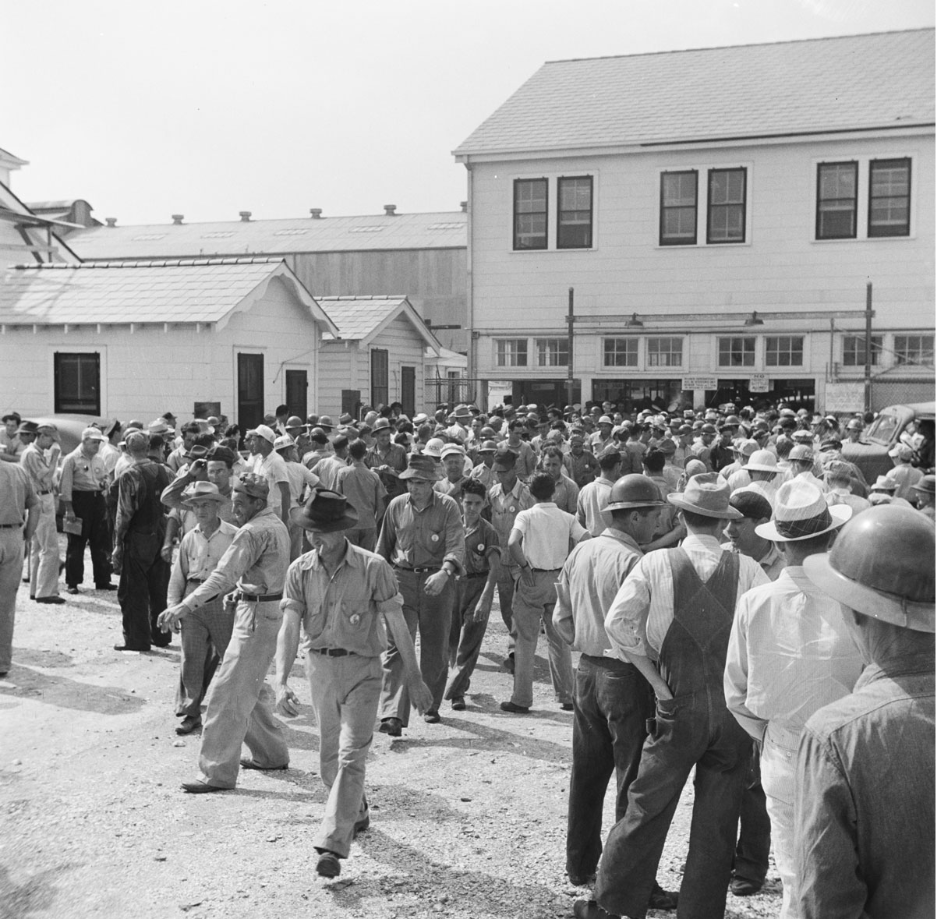
An increase in the availability of employment in cities where facilities for manufacturing war-related products were located fueled urban growth. Greater New Orleans’ population increased by about 64,500 during the war years, and it remained the state’s largest urban area with about 559,000 residents. Shreveport grew by almost 18,000 people during the war to about 130,000 while Baton Rouge remained in third place, even though it grew to a population of about 110,000 in 1945.
Training troops also led to population growth. The Louisiana Maneuvers and the network of training camps and military facilities in Central Louisiana helped Alexandria and Pineville’s combined population increase by about 29,000 by 1945 to reach a total of about 60,000, a figure more than doubling their combined population in 1940. Alexandria resident Frances M. Bolton Davis later remembered the crowded feel of the city during the war: “the crowds made it almost impossible to go to the movies or out to restaurants to eat, especially on the weekends.”
Population growth in urban areas caused other shifts in where people lived. New or expanded war plants located mainly in urban areas because of the concentration of prospective employees already there and then attracted more people to move there to obtain jobs. People who moved from other states to Louisiana for those jobs increased the state’s population numbers, but people from rural areas of the state also moved to cities in order to obtain jobs. They gave up the uncertainties of agricultural work at incomes lower than those offered in the factories and plants. The resulting rural to urban shift led to Louisiana reaching the milestone of having a majority urban population for the first time in the 1950 Census. It also led some rural parishes to lose population during the war.
Another shift that began during the war that continues in the state includes people who moved from North Louisiana to South Louisiana. Many of the businesses producing war goods located in the southern part of the state because of the availability of natural resources or other reasons. The city population figures cited above show that two of the state’s three largest urban areas in 1945 were located in southern Louisiana, and those figures do not include the smaller cities of Lafayette and Lake Charles. Only Shreveport stands out in North Louisiana as a significant urban area of more than 100,000 residents. Adding the populations of Monroe and Alexandria does not tip the numbers in favor of the northern part of the state.
The photograph from the Louisiana Endowment for the Humanities publication 64 Parishes accompanying this post shows a large number of employees at Higgins Industries in New Orleans during World War II.